The Role of Data Analytics in Modern Distribution
Distributors sit on valuable data but often struggle to use it. Analytics turn raw data into insight that drives better decisions.
Overview
In the age of digital business, data has emerged as one of the most valuable, yet often untapped, assets in the wholesale-distribution sector. The complexity of managing thousands of SKUs, varying customer agreements, and volatile supply chains generates massive amounts of transactional data every single day. Historically, harnessing this data required specialized software and large, dedicated analytics teams - resources often out of reach for SMEs (Small and Mid-sized Enterprises).
Today, this barrier is gone. With a modern, cloud-native ERP (Enterprise Resource Planning) system, SMEs gain built-in access to powerful data analytics and business intelligence (BI) capabilities. These tools translate raw transaction data into actionable insights, enabling distributors to make the faster, smarter, and more profitable decisions necessary to compete.
Understanding SKU-Level Profitability
One of the most common pitfalls for distributors is relying on general revenue figures without understanding the true cost and profitability of individual products and customers. Data analytics shines a light on these crucial details.
SMEs can quickly generate precise reports to identify:
- Low-Margin Products: Analytics combine the true landed cost (including freight, duties, and handling) with selling price to flag SKUs that are barely breaking even or losing money.
- High-Return SKUs: Identifying which products consistently generate the highest profit allows distributors to focus sales efforts and marketing dollars where they matter most.
- Cost-to-Serve for Each Customer: By analyzing order frequency, size, delivery complexity, and return rates, the ERP can calculate the true cost of servicing a specific account. This insight is vital for adjusting pricing or service agreements for high-maintenance, low-profit customers.
Understanding profitability at the SKU-level is the foundation for targeted pricing strategies and inventory optimization.
Improving Demand and Supply Forecasting
Guesswork in forecasting is a leading cause of both stockouts and costly overstocks. Data analytics replaces instinct with science, offering a dynamic and reliable view of future needs.
Analytics help distributors pinpoint complex patterns and variables, leading to more accurate predictions:
- Seasonal and Cyclical Demand: BI tools analyze years of sales data to accurately identify and predict seasonal spikes and dips, allowing purchasing managers to proactively adjust safety stock levels.
- Supplier Reliability: By tracking historical lead times and order fulfillment rates for each vendor, distributors can accurately assess and rank supplier performance. This is crucial for making sourcing decisions and adjusting the necessary buffer time in the purchasing cycle.
- Sales Rep Performance: Analytics can move beyond simple total sales volume to evaluate profitability and efficiency. For example, which sales reps are selling high-margin products versus low-margin volume?
This enhanced forecasting ability ensures inventory levels are consistently optimized, reducing carrying costs while maximizing fulfillment rates.
Enhancing Customer Insights and Loyalty
The modern distributor's relationship with its customers is managed by data. Analytics provides a deeper, quantitative understanding of customer behavior, which is essential for building loyalty and mitigating risk.
Distributors can track and analyze critical customer data points:
- Buying Frequency and Recency: Identifying patterns in how often and how recently a customer has purchased helps sales teams time their follow-ups perfectly.
- Churn Risk: BI can flag customers whose buying frequency or order size has unexpectedly declined, creating an automated alert that allows sales teams to intervene before the account is lost.
- Order Size Trends: Analyzing changes in average order value (AOV) or product mix can signal a change in the customer’s business health or needs, creating opportunities for targeted upselling or product bundling.
These insights allow for a personalized sales approach, transforming general customer service into a strategic loyalty program.
Real-Time Dashboards for Executive Oversight
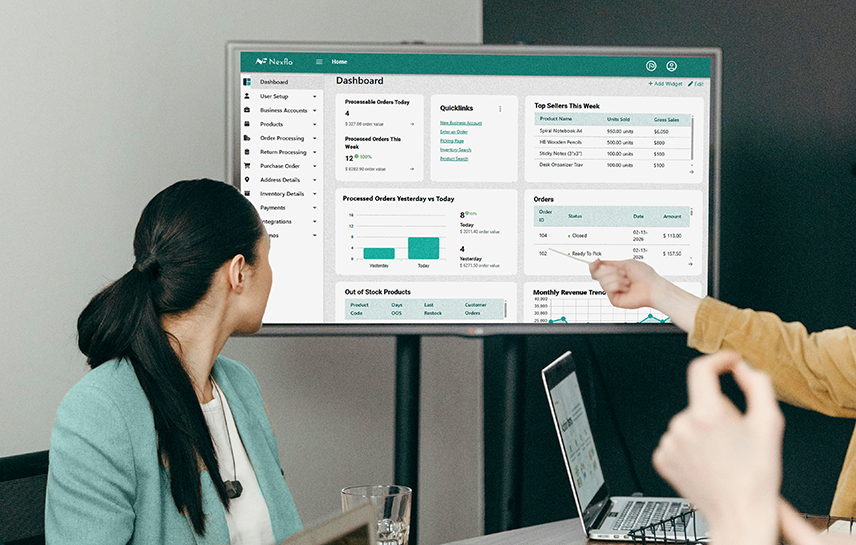
Perhaps the most practical application of distribution analytics is the use of real-time dashboards. These customizable visual interfaces synthesize complex data from across the ERP into simple, actionable KPIs.
Executives and managers can monitor the health of the business at a glance, allowing for immediate action on deviations:
- Inventory Health: Tracking metrics like inventory turnover ratio, fill rate, and stockout probability.
- Cash Flow: Monitoring accounts receivable (AR) aging, days sales outstanding (DSO), and payables.
- Operational Bottlenecks: Instantly seeing where delays occur in the warehouse, such as slow receiving times or picking backlogs.
- Sales Pipelines: Providing a live view of the value and stage of quotes and pending orders.
Conclusion
Data analytics is the engine that drives modern, efficient distribution. By integrating powerful BI tools directly into a cloud ERP, SMEs gain the crucial visibility required to operate with the agility and insight of much larger firms.
Analytics enables distributors to move beyond reactive decision-making based on yesterday's spreadsheets. Instead, they can make faster, smarter, and proactive decisions about pricing, purchasing, and customer service, directly translating into protected margins and sustainable growth.
Get a free painpoint assessment
Completing a 3-question survey is the first step we can help your business reach its full potential
